
Students will
Learning objectives
- Describe what a main character wants, the problem in the way and how the character changes.
- State a story's theme as a full sentence that could apply to other stories.
- Support a theme with an event from the story.

Students answer four clue questions about a story's main character, then use the clues to write the theme with proof from the story.
Only the colour PDF is ready for this resource so far. The other formats are on the way.
Last updated
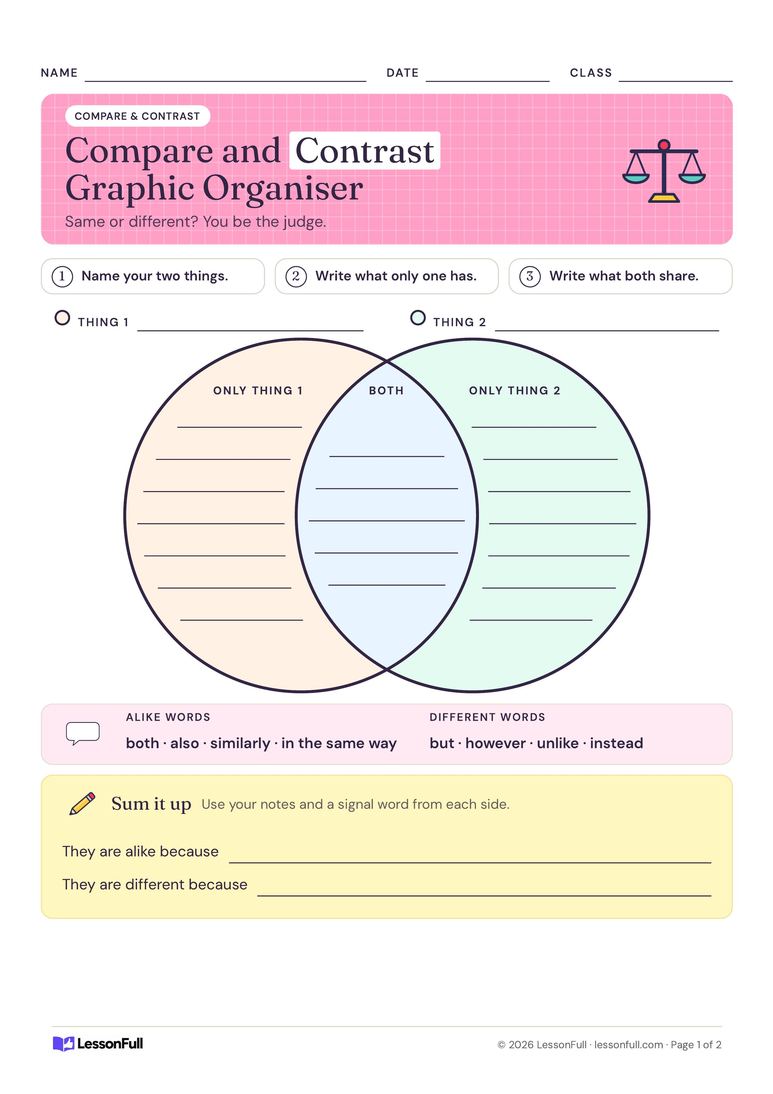
Use this organiser with any story students have read. They answer four clue questions in a two-by-two grid: what the main character wants, what gets in the way, how the character changes and what lesson the character learns. The clues then become one theme sentence, tested for whether it fits the whole story and leaves out the characters' names. The model page fills in every box for "Kesi's Nest," a short fable about a young weaverbird whose nests keep blowing loose until he asks an older bird for help.

Students often write a topic, like "helping," in the Theme box. Show that the frame "The author wants us to learn that…" can't be finished with one word, then compare their answer with the model theme.
Clue 4 and the theme are easy to mix up. In the model, clue 4 is about Kesi (help made his nest strong enough for a storm), while the theme drops his name and applies to anyone. Point students to the last item in the Theme check.

Ways to adjust the theme organiser for different readers.
Each one is checked against the official document. Where the resource covers only part of a standard, the note says so.
Students use four questions about what the main character wants, the problem, the change and the lesson to state a story's theme, back it with proof from the story, and check it against a list. Conventions and comparing across books are not covered.
The same organiser helps students identify a story's theme. It is used with one story at a time and does not deal with conventions.
Used it in class? Your notes help another teacher plan.