
Learning objectives
- Write uppercase T and lowercase t, each from one line across and one line down.
- Decide whether a spoken picture name starts with the t sound.
- Place the line across T on the top line and the line across t on the middle line.
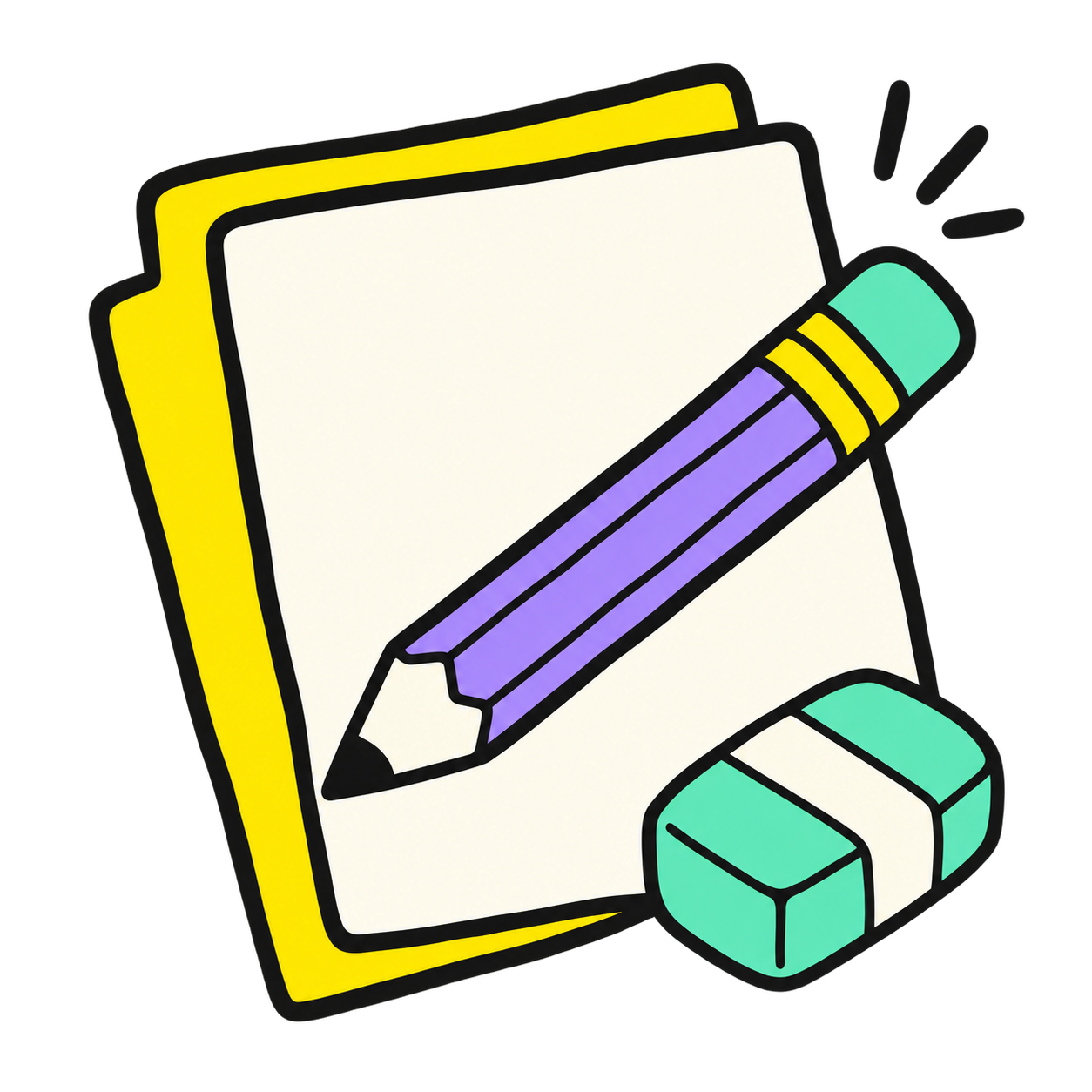
Students trace T and t, mark thumbs up or down for six pictures by first sound, and join dots to build each letter.
Only the colour PDF is ready for this resource so far. The other formats are on the way.
Last updated
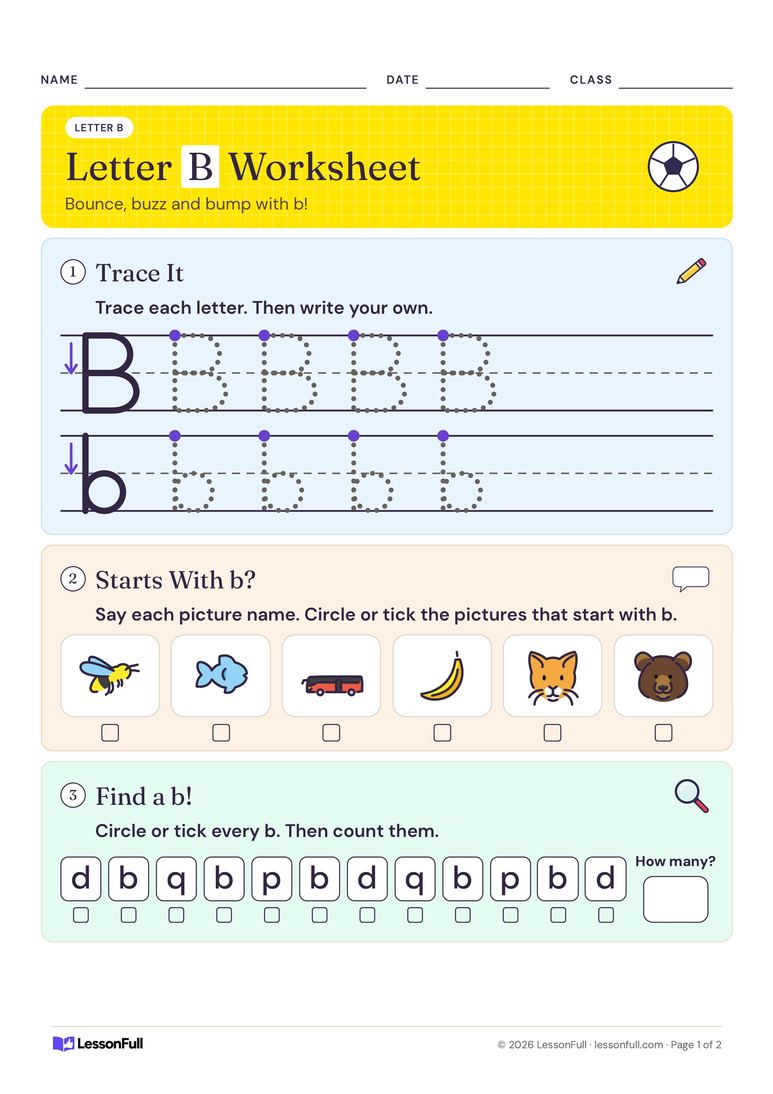
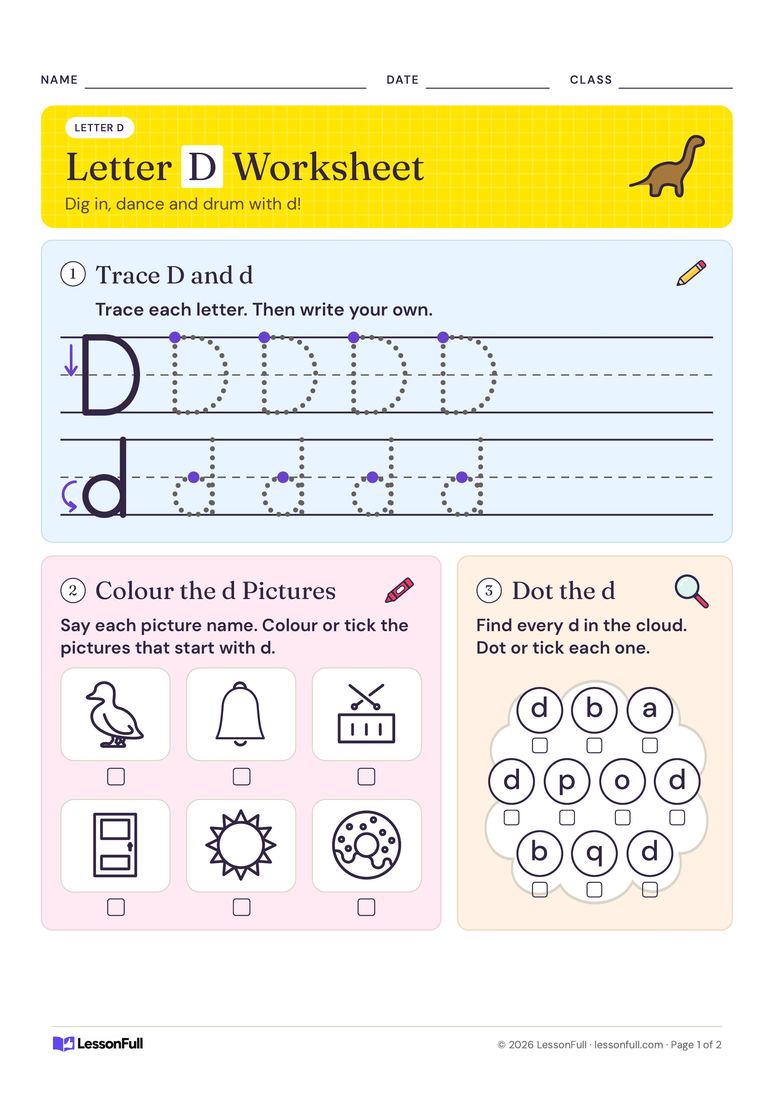
Big T and little t each have a card with a solid model, three dotted letters with start dots and a blank line for writing. An arrow shows that the stick of little t comes first, before the short line across. In Thumbs Up for t?, children name six pictures aloud and give each a thumbs up or down, so non-readers can answer too. Build a T then has them join dots with one line across and one line down, which shows that both T and t are just two straight lines.
Watch the kite: the k sound, like t, is a quiet burst of air, so some children give it a thumbs up. Say "kite" and "tiger" slowly side by side and ask where in the mouth each sound starts.
In Build a T, children often draw the short line of little t on the top line, which turns it into a small T. Point to the two dots on the middle line in the t frames: the line across goes there.
Ways to adjust the Letter T page for different learners.
Each one is checked against the official document. Where the resource covers only part of a standard, the note says so.
Students say picture names and pick the ones that start with the t sound. Only this one letter is practised; other letters and two-letter sounds are not.
Students trace and then write little t, starting at the start dot and following the arrows. Capital T is also traced, which the separate "form capital letters" point covers.
Students trace and copy big T and little t until they can write them on their own. They also build T and t by joining dots. Writing words and sentences is not covered.
Used it in class? Your notes help another teacher plan.