Students will
Learning objectives
- Explain that ten ones make one ten.
- Show and write the numbers 11 to 19 as one ten and some ones.
- Write a teen number as 10 plus a number and find the missing part.
- Decide whether a group is exactly ten ones.

Students circle ten sticks, read cube trains and fill in a chart to show numbers from 10 to 19 as one ten and some ones.
Color, printable and fillable PDFs are ready. Google Classroom is on the way.
Materials: none (straws and rubber bands optional)
Last updated
A Make a Ten picture ties 10 loose sticks into 1 ten. Students circle 10 sticks in rows of 13, 16, 11 and 19 and write the tens, ones and number, then read four cube trains. Draw the Ones gives a train of ten beside 15, 11 and 18 for students to finish. Page 3 moves to numbers only: 10 + 6, 19 = 10 + □ and 1 ten 0 ones, a chart for 17, 12 and 10, and four scattered cube groups to judge as exactly ten or not.

Item 16, 1 ten 0 ones, is the one students leave blank or answer with 1. Point to row 20 of the chart, where 10 is written as 1 ten and 0 ones.
Item 22 has 9 cubes and item 23 has 12. Have students touch and count each cube aloud; students who judge by the spread often mark both as one ten.

Ways to adjust the stick, cube-train and number-only tasks.
 Topic 1Counting to 120
 Topic 2Numbers to 120
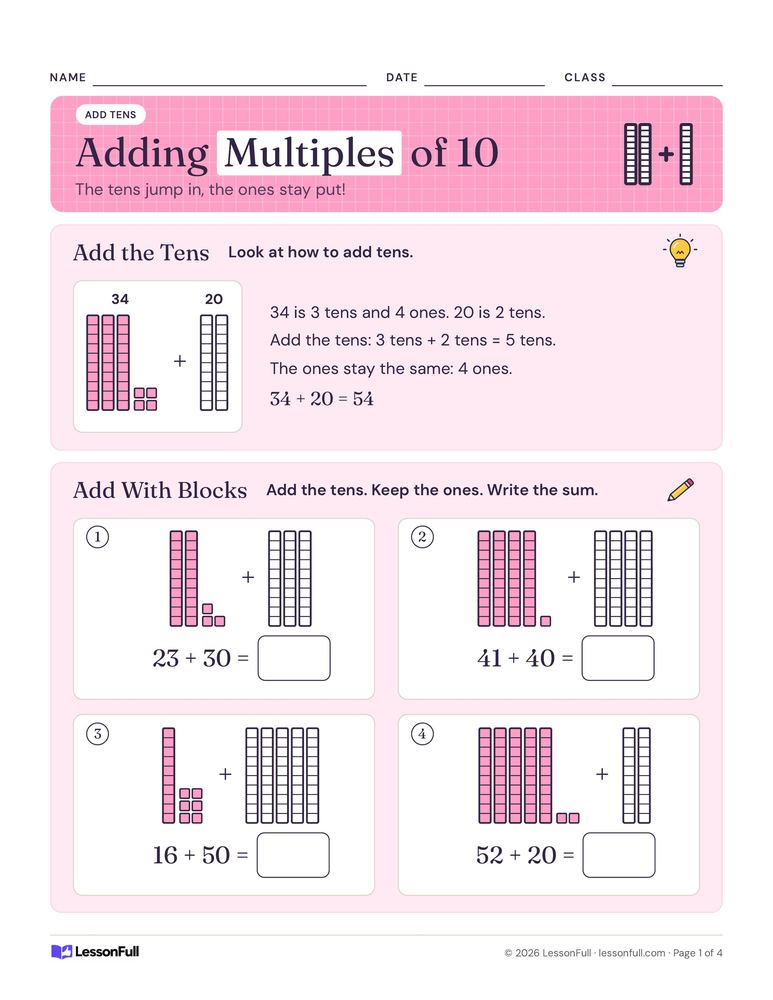
 Topic 3A ten is ten onesYou are here
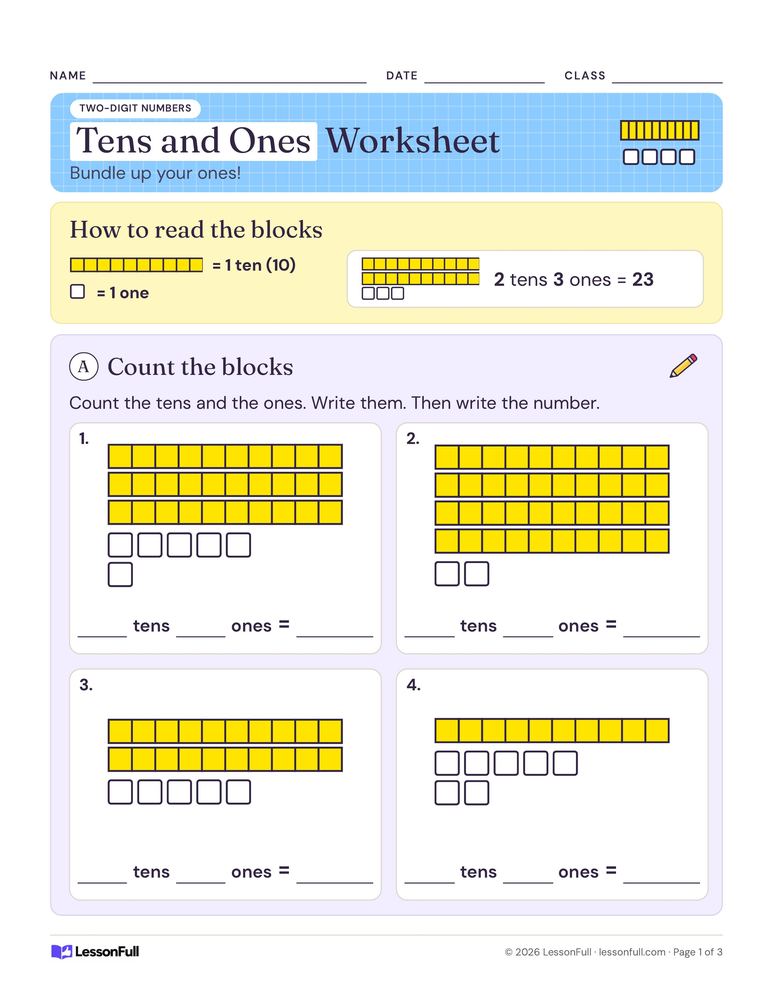 Topic 4Tens and ones
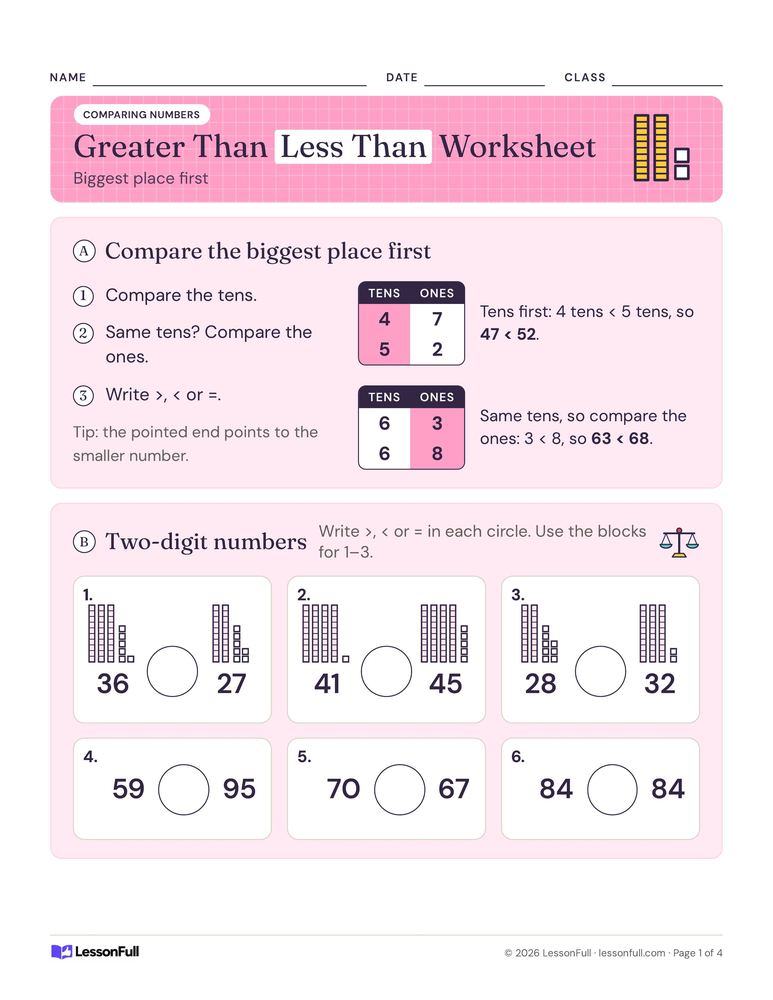 Topic 5Comparing numbers
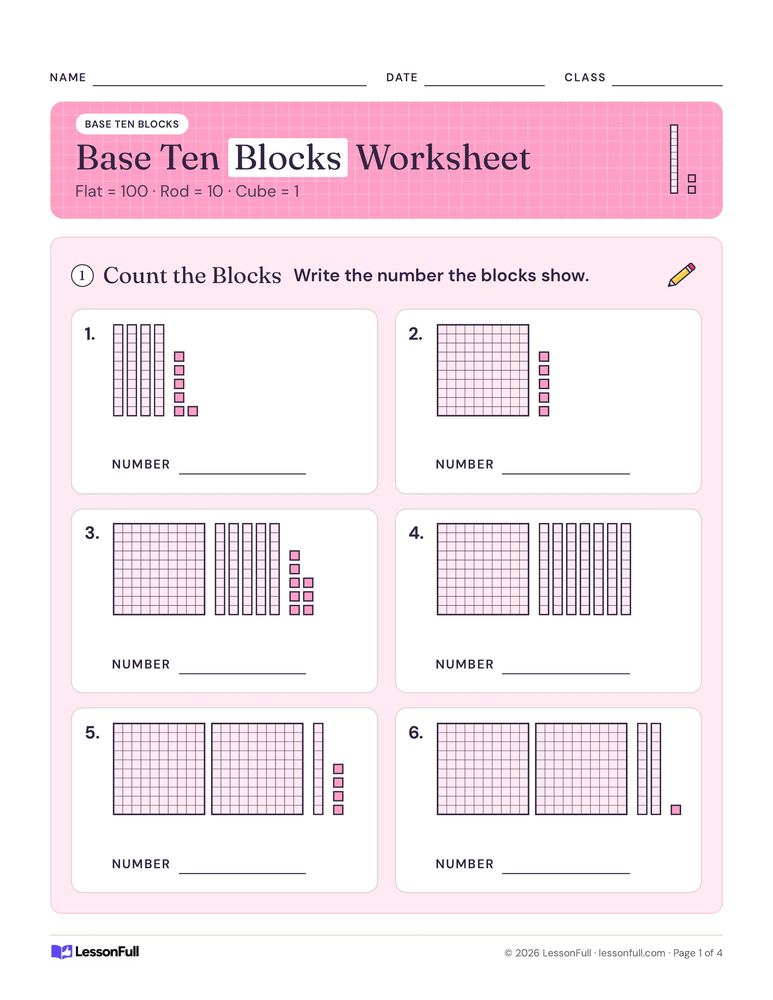 Grade 2 · Topic 1Hundreds, tens and ones
Each one is checked against the official documents. Where the resource covers only part of a standard, the note says so.
Students circle ten sticks and write 1 ten 3 ones = 13, read cube trains as 10 + 4, draw the ones needed for 15, 11 and 18, fill in 10 + ? = 13 and a tens and ones chart, all from 11 to 19. Numbers above 19 are not used.
The opening model ties ten ones into one ten, and students decide whether a group of cubes is exactly one ten (10 yes, 9 and 12 no) and write 10 as 1 ten 0 ones.
Students write teen numbers from stick and cube pictures, draw the ones for 15, 11 and 18, and write each number as 10 + 6, 1 ten 4 ones and the numeral, all between 10 and 19. Numbers above 19 are not used.
Students bundle ten sticks, break teen numbers into 1 ten and some ones in a chart, and check whether a group is exactly one ten. Each number is shown only as one ten and ones, not in more than one way, and hundreds are not involved.
No. Every number is from 10 to 19. Two-digit numbers beyond 19 come in the next step.
Used it in class? Your notes help another teacher plan.