Learning objectives
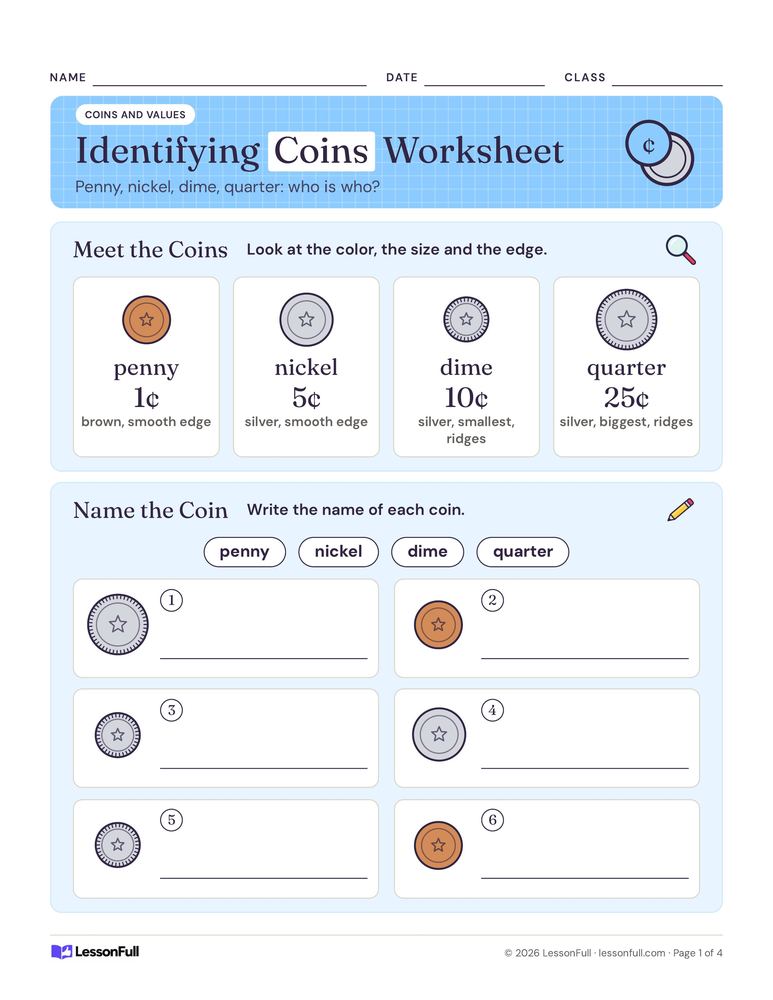
- Name each coin using its color, size and edge.
- Write the value of each coin.
- Tell which of two coins is worth more, even when it is smaller.
- Sort a group of coins, count each kind, and find the value of a group of the same coin.

Students name each coin from its color, size and edge, write each coin's value, pick the coin worth more and count same-coin groups.
Color, printable and fillable PDFs are ready. Google Classroom is on the way.
Materials: none (real or play coins optional)
Last updated
Each coin is a plain flat drawing in true relative size, with no real coin designs, so students tell the coins apart by color, size and edge. A Meet the Coins card gives every coin's name, value and cues. Students name coins from a word bank, write values and pick the coin worth more in pairs, some where the smaller coin is worth more. Who-am-I clues follow. A tray of mixed coins is sorted into a table with most and how-many-more questions, and the last section counts groups of the same coin.
Before Which Is Worth More?, hand out two real coins where the smaller one is worth more. Students who choose by size pick the bigger coin; ask which is worth more, then point to the Meet the Coins card.
In the sort tray, two kinds of coin may share a color or an edge. Students who sort by one cue alone put them together, so have them check a second cue.
Ways to adjust the naming, value and counting tasks.
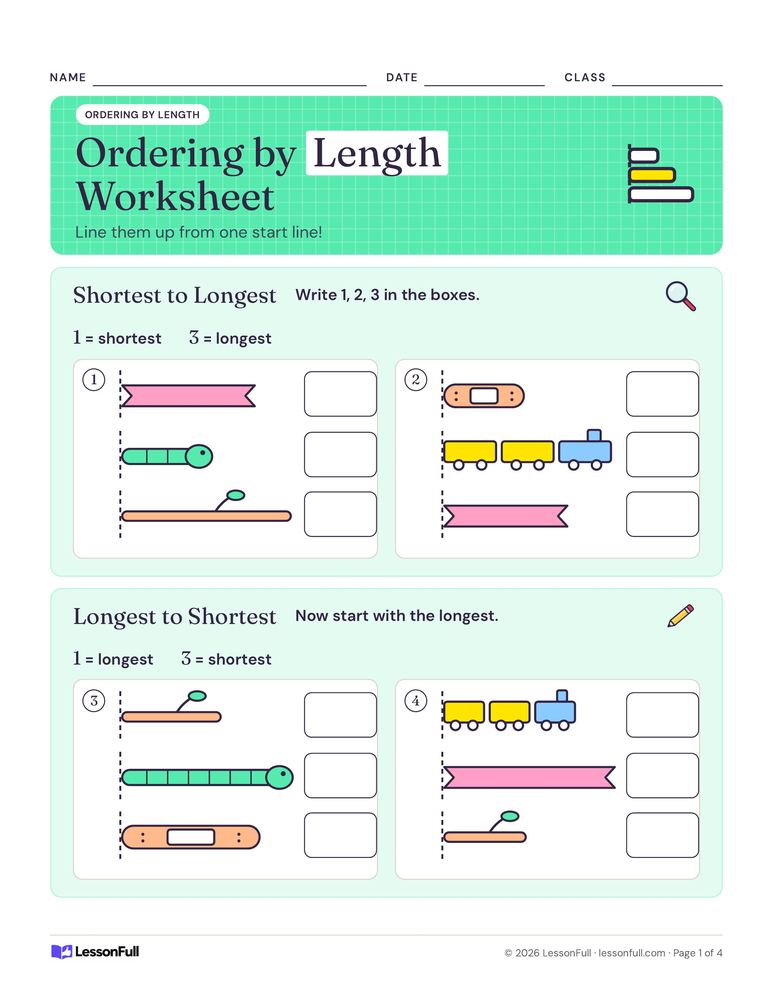
Topic 1Ordering by length
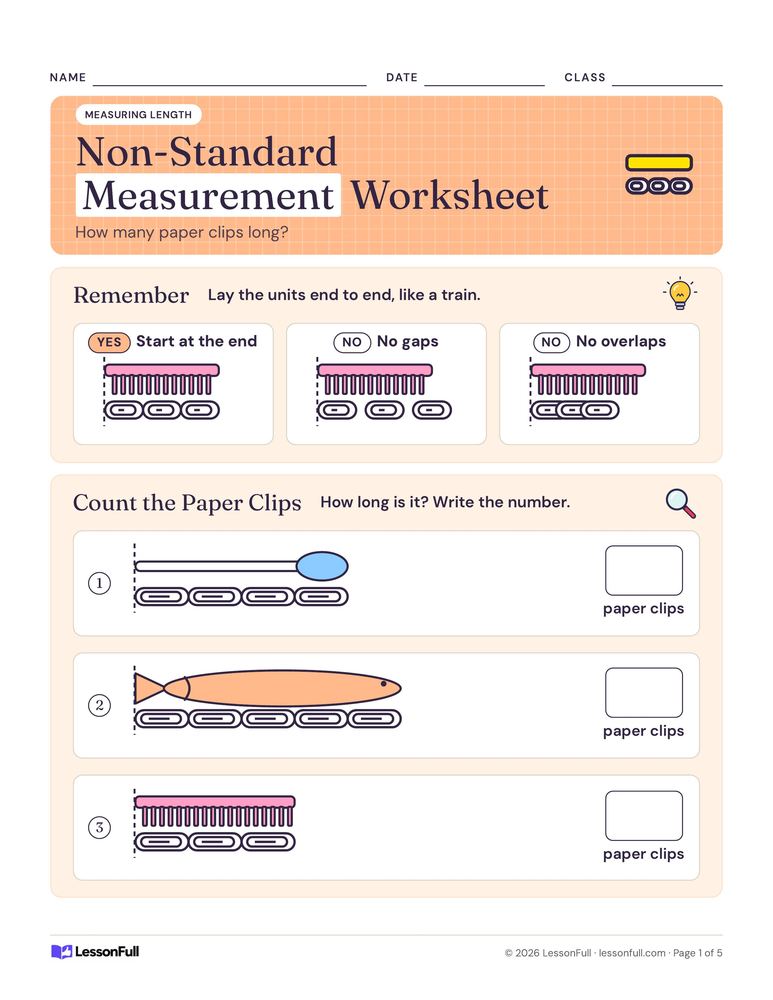
Topic 2Measuring with units
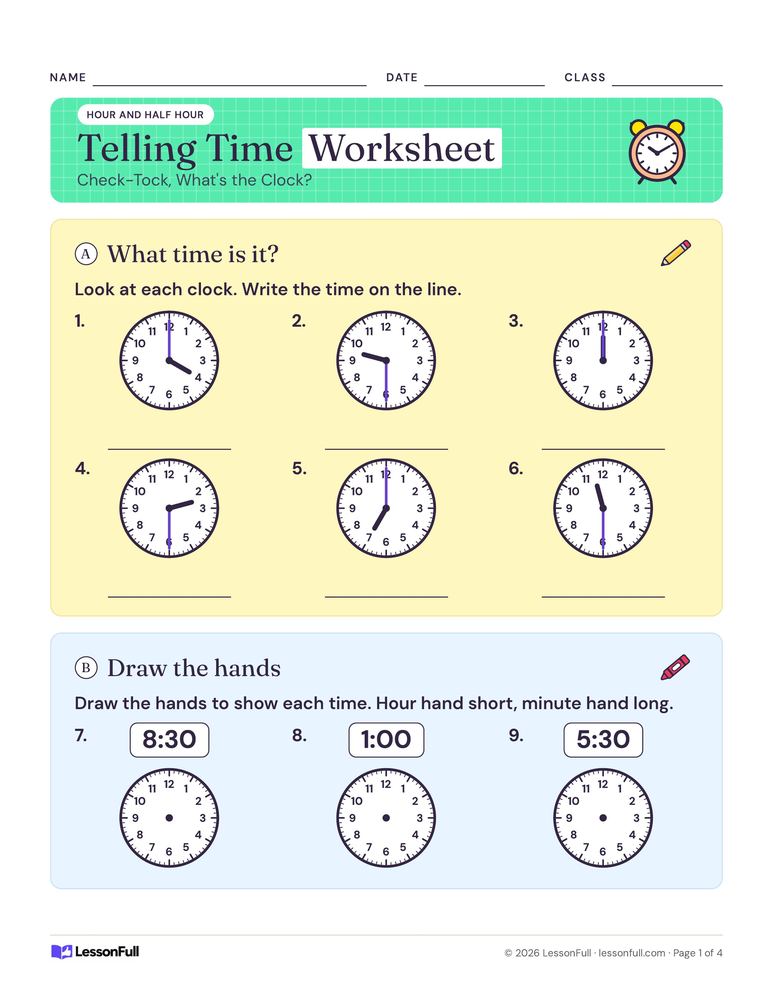
Topic 3Time to the hour
Topic 4Time to the half hour
Topic 5Identifying coinsYou are here
Topic 6Days and monthsEach one is checked against the official document. Where the resource covers only part of a standard, the note says so.
Students name pennies, nickels, dimes and quarters by color, size and edge, solve who-am-I clues, pick the coin worth more in four pairs, and learn that the small dime is worth more than the penny and nickel.
Students write the value of four coins in cents (5¢, 25¢, 1¢, 10¢) and write totals such as 30¢ with the cent symbol.
Students count small groups of pennies by ones and groups of dimes by tens (10, 20, 30) to find how many cents. Counting nickels by fives and counting by twos are not asked, and coins are never mixed.
No. Each coin is a plain drawing in true relative size and color, so students rely on color, size and edge. No real coin designs are copied.
Used it in class? Your notes help another teacher plan.