Students will
Learning objectives
- Write uppercase M and lowercase m, starting little m at the middle line.
- Choose the first letter of a spoken picture name from two options.
- Write m at the start of a word to match its picture.
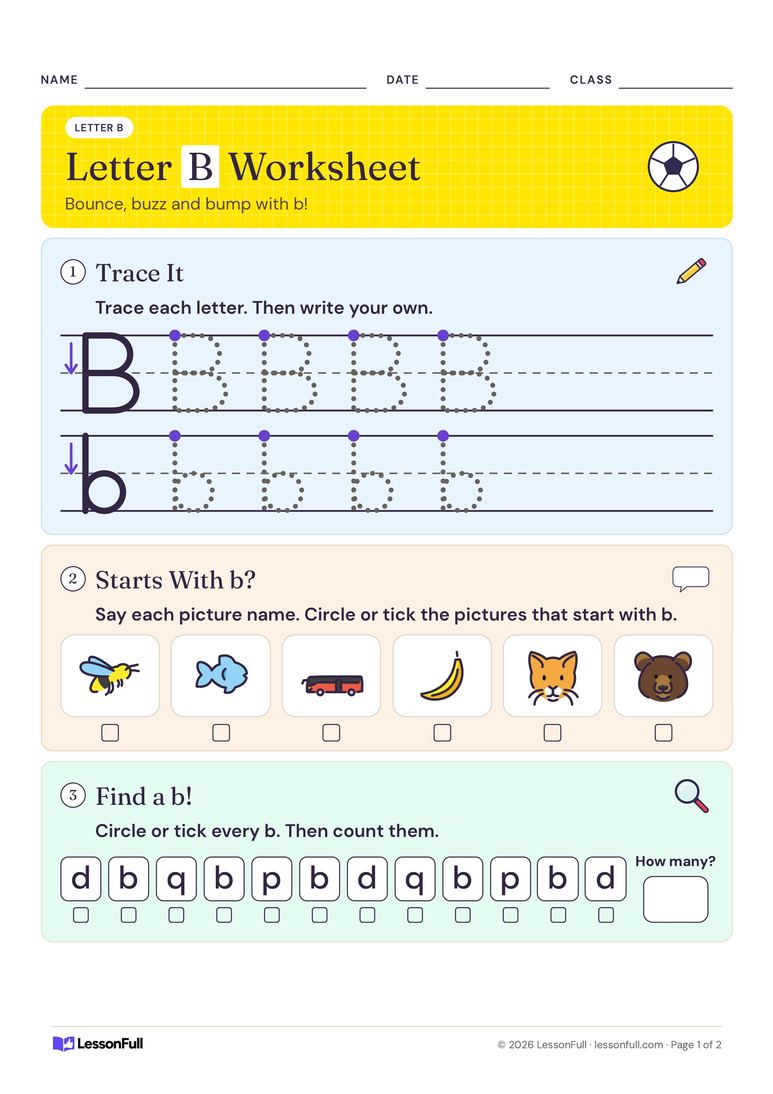
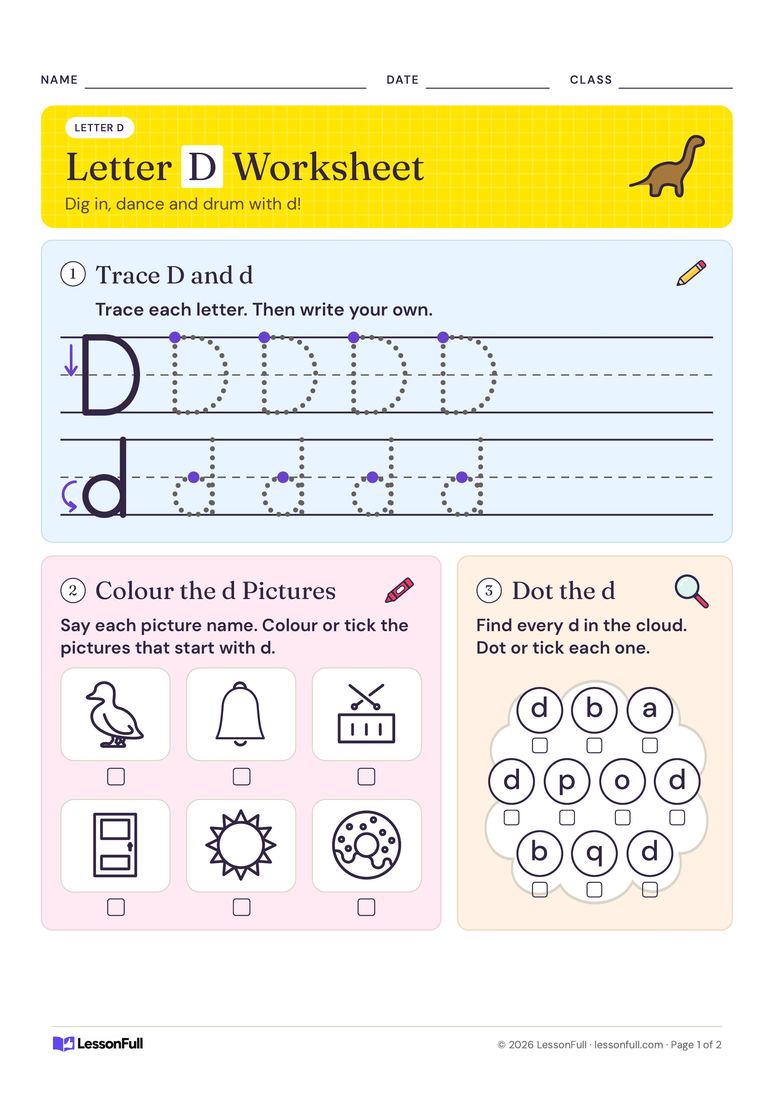
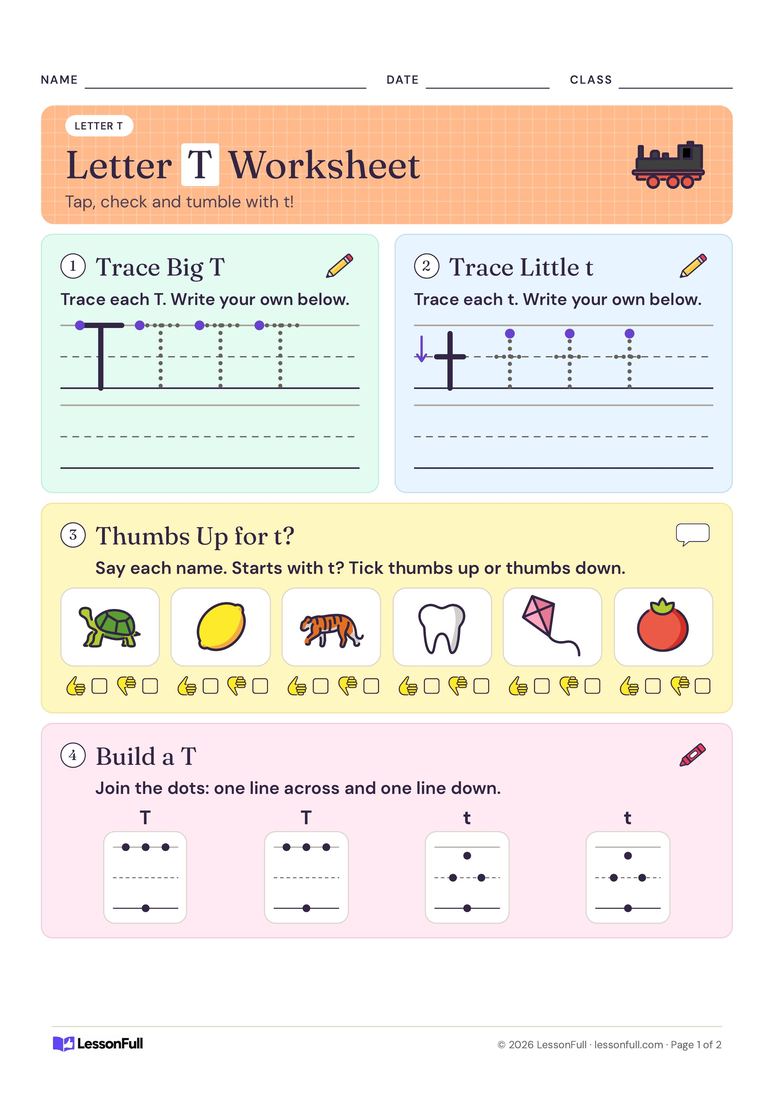
Students trace M and m, choose the first letter for six pictures, and write m to finish map, mouse and magnet.
Only the colour PDF is ready for this resource so far. The other formats are on the way.
Last updated
Big M starts at the top line and little m at the middle line, with two humps; each gets a solid model, a down-arrow and four dotted copies to trace. Next, six picture cards such as moon, monkey and mushroom each offer m and one other letter; the duck and tree cards have d and t as their answers. Students then write m in front of ap, ouse and agnet to name a map, a mouse and a magnet. The key suggests humming with closed lips before naming each picture.
The mitten card offers n and m, the closest pair on the page, since both are humming sounds. Have children hum with closed lips for m, then try n with lips apart, before they choose.
Some children mark the first letter on every card. The monkey and mitten cards put m second, so a wrong answer on those two shows a child choosing by position rather than by sound.

Ways to adjust the Letter M page for different learners.
Each one is checked against the official document. Where the resource covers only part of a standard, the note says so.
Students find and name capital M and small m and pick out pictures that start with the m sound and write m to finish map, mouse and magnet; it covers this one letter only, not all the letters of the alphabet.
Students say each picture name and listen for whether it starts with the m sound, which practises picking out the first sound in a word; blending, segmenting and swapping sounds are not covered.
Students trace and then write capital M and small m following the stroke directions; it practises these two letter shapes only.
Used it in class? Your notes help another teacher plan.