Students will
Learning objectives
- Write the number shown by flats, rods and cubes.
- Draw a three-digit number with squares, lines and dots.
- Find 10 more or 100 less than a number shown in blocks.
- Explain why 1 hundred equals 10 tens.

Students count flats, rods and cubes to name six numbers, draw four numbers with quick sketches, and regroup a hundred as ten tens.
Download the landscape PowerPoint file, open it in Google Slides and save it as Google Slides before assigning a copy to each student. Teacher material stays in the original PDF. Classroom setup instructions.
Materials: none (base-ten blocks optional)
Last updated
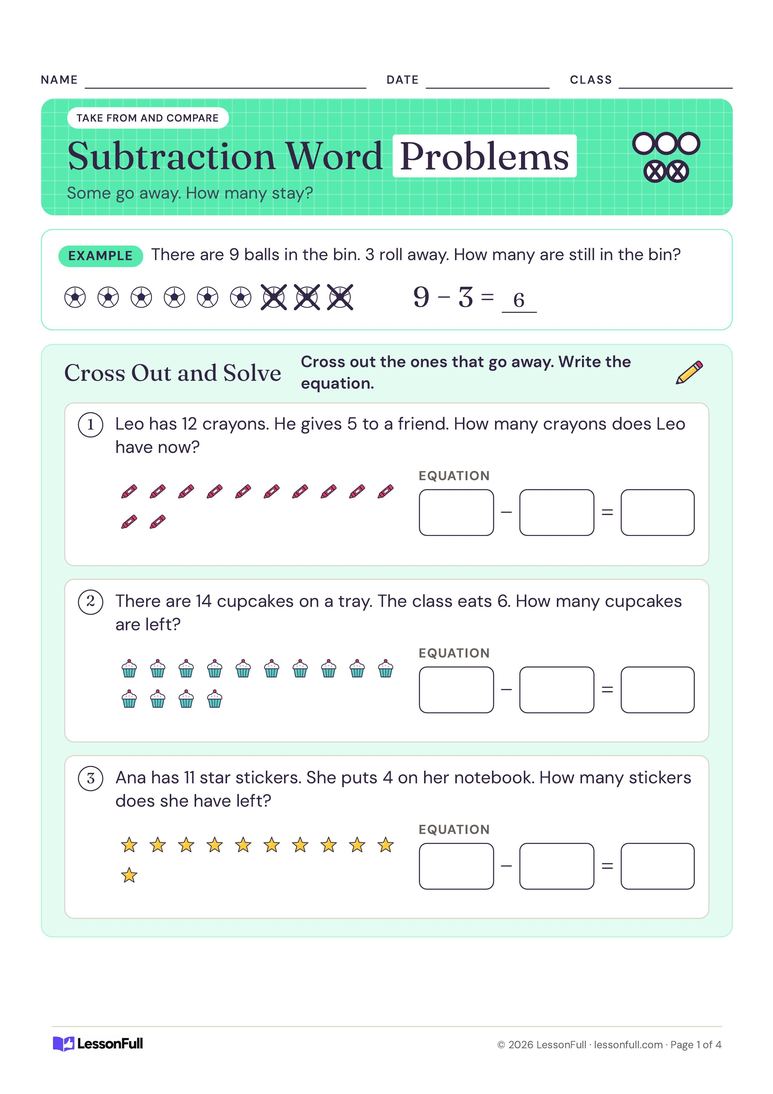
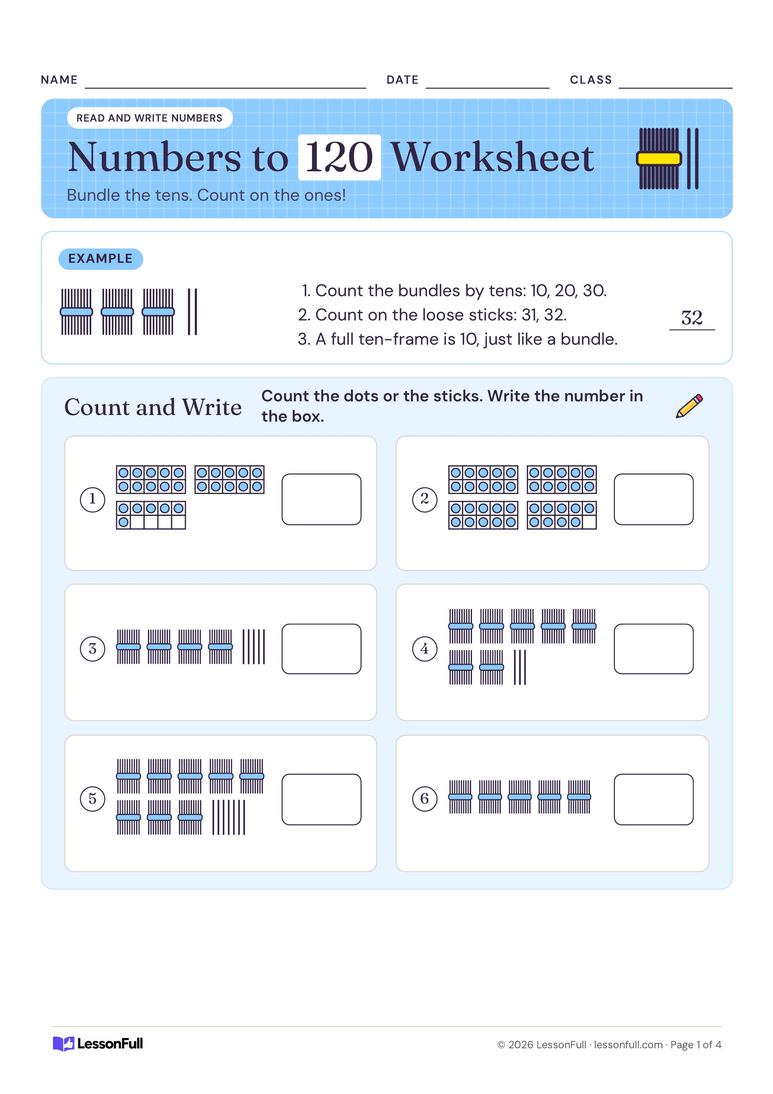
Every flat in the six page 1 pictures shows a 10-by-10 grid and every rod 10 cubes, and students write the number each picture shows. Two of them, 105 and 170, have an empty place. On page 2, a key gives the quick drawing for each block, a square, a line and a dot, and students draw 243, 315, 106 and 430. Page 3 asks for 1 more ten or 1 less hundred than three pictured numbers.

In 106 and 430 one place is 0, and the key's teacher tip says to draw nothing for it. Students who draw one line for the 0 in 106 have drawn 116; have them read the number back from their own drawing.
Item 12, 1 less hundred than 114, is 14, not 104 or 014. Have students cover the one flat in the picture and count what is left: 1 rod and 4 cubes.
For 170 on page 1, students who skip the empty cube place sometimes write 17. Ask how many flats they see before they count the rods.

Ways to adjust the block pictures, drawings and regrouping items.
Each one is checked against the official document. Where the resource covers only part of a standard, the note says so.
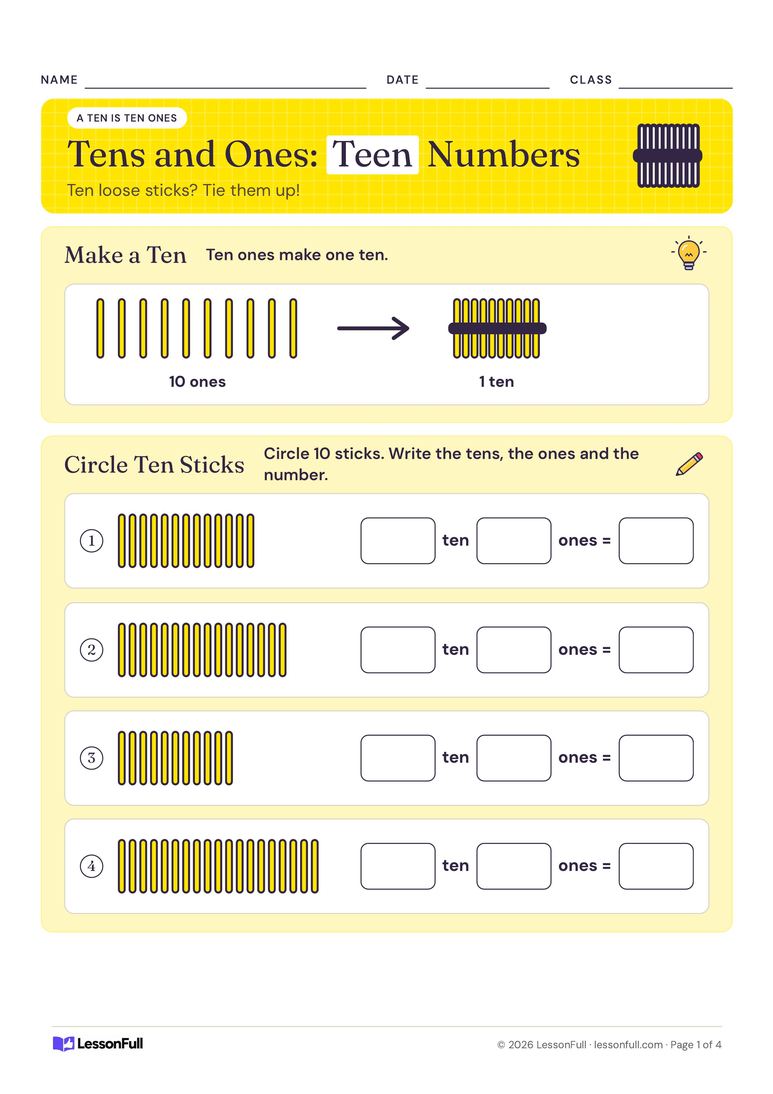
Students show 130 with 1 flat and 3 rods and then with 13 rods, say how many tens make a hundred, find 1 more ten or 1 less hundred, and see that a zero means nothing is drawn for that place in 106 and 430; this matches the standard closely for numbers up to 315, using drawn blocks rather than other groupings.
Students write the number shown by pictures of flats, rods and cubes and draw numbers such as 243 and 315 with squares, lines and dots; ordering numbers and number lines are not covered.
No. Every number is pictured or drawn with squares, lines and dots. The key suggests real blocks for students who mix up rods and flats.
Used it in class? Your notes help another teacher plan.